
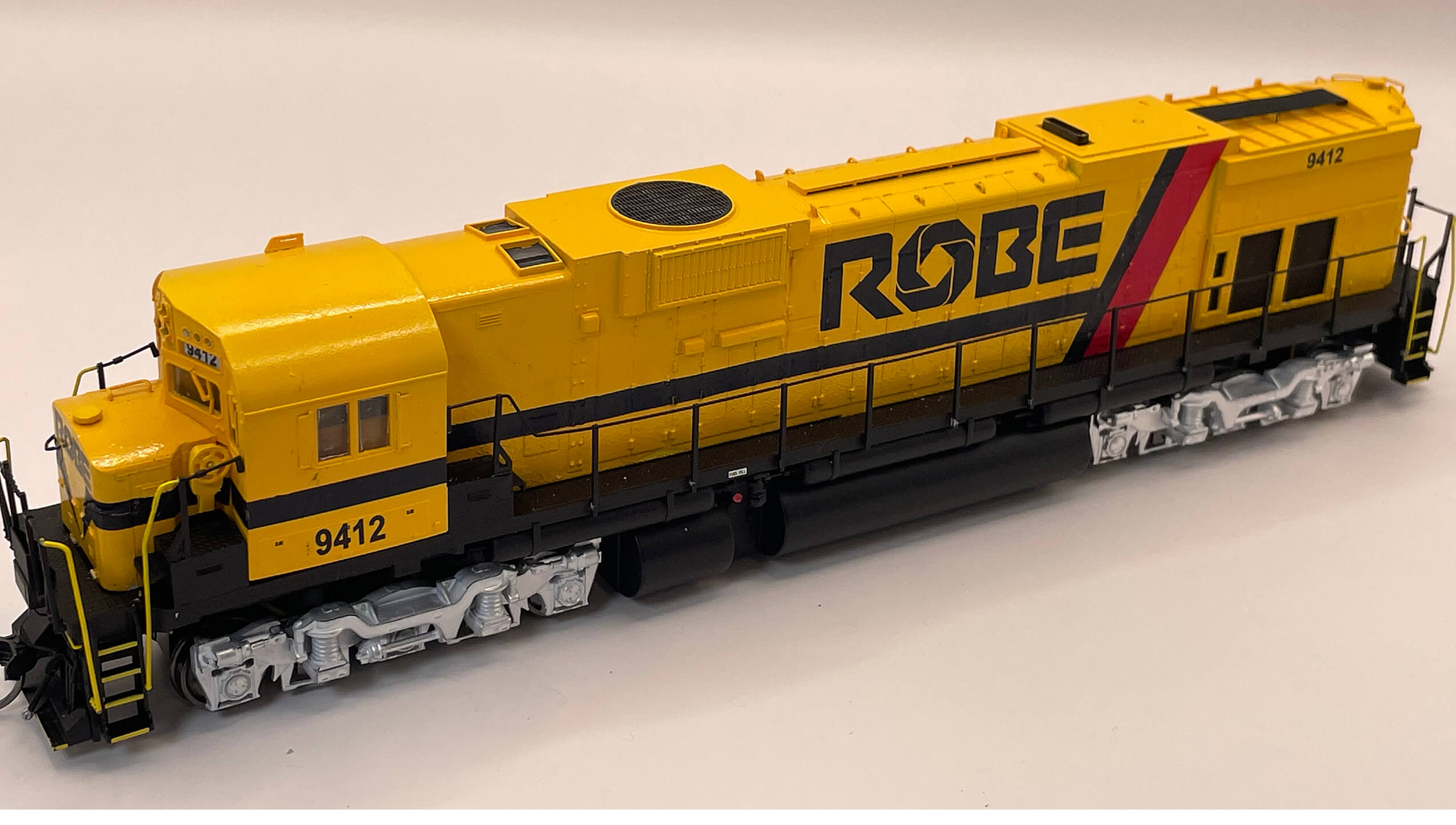

Robe River ALCO M636 #9412.
A six axle diesel electric locomotive Robe 9412 was built by AE Goodwin NSW as an ALCo M636 model in December 1971 which was part of the original order for five units. Circa 1974 it was renumbered to 9412. In c2001, it was stored at Cape Lambert and later moved to storage at Seven Mile yard Karratha. It was purchased by GTSA in 2007 and sent to Maddington WA and was subsequently scrapped ~2010. The second photo is the original locomotive before its livery was changed and renumbered to 9412. The photo was taken circa 1973 - photo courtesy of Rail Heritage WA.
To start the process of converting the locomotive to a completely different livery, requires the shell or body to be removed from the chassis which by and large isn't that difficult but usually there will be wires running from the chassis to front and rear lights. These wires need to be disconnected so the upper body can be further disassembled. All windows, horns, lights, handrails, and any other part that can be removed from the body. Once the body is completely stripped of accessories and bling, it needs to be submerged in a tank of 99% IPA (isopropyl alcohol) for any time from a few hours to maybe 3 days. This will remove any decals and soften the existing paint allowing total removal back to its original plastic finish. This is a good time then to make any modifications and undertake repairs if necessary, prior to applying a primer and finally the required top coat. The top coat can be a single colour or multiple colours that will require spraying the lighter colours first then masking the locomotive to protect the newly applied coat and repeating the step until the final coat is applied. In the meantime, the correct decals need to be sourced from a supplier either by way of decals that are available as off the shelf purchase or in most cases, the decals will need to be designed and the graphics file sent away to a decal specialist for printing. I design all my decals using Adobe Illustrator software and when completely satisfied that I have got it right upload to the decal supplier. From then on, it's a process a reverse assembly, that is, to apply the decals and all the accessories required along with the installation of LED lights as required. All my locomotives are fitted with ESU Loksound digital sound decoders programmed with the correct sounds file to match the locomotive that is being worked on. Once the decoder and all necessary wiring is complete, the body can be reunited with the chassis and given a test run.

